
NetBet Design System & Campaign Template
Three squads, three different buttons. Two checkout flows that should have shared a form field but did not. Marketing drew every campaign asset by hand.
- −70%campaign asset time
- −80%Jira tickets to design
- 4channels unified
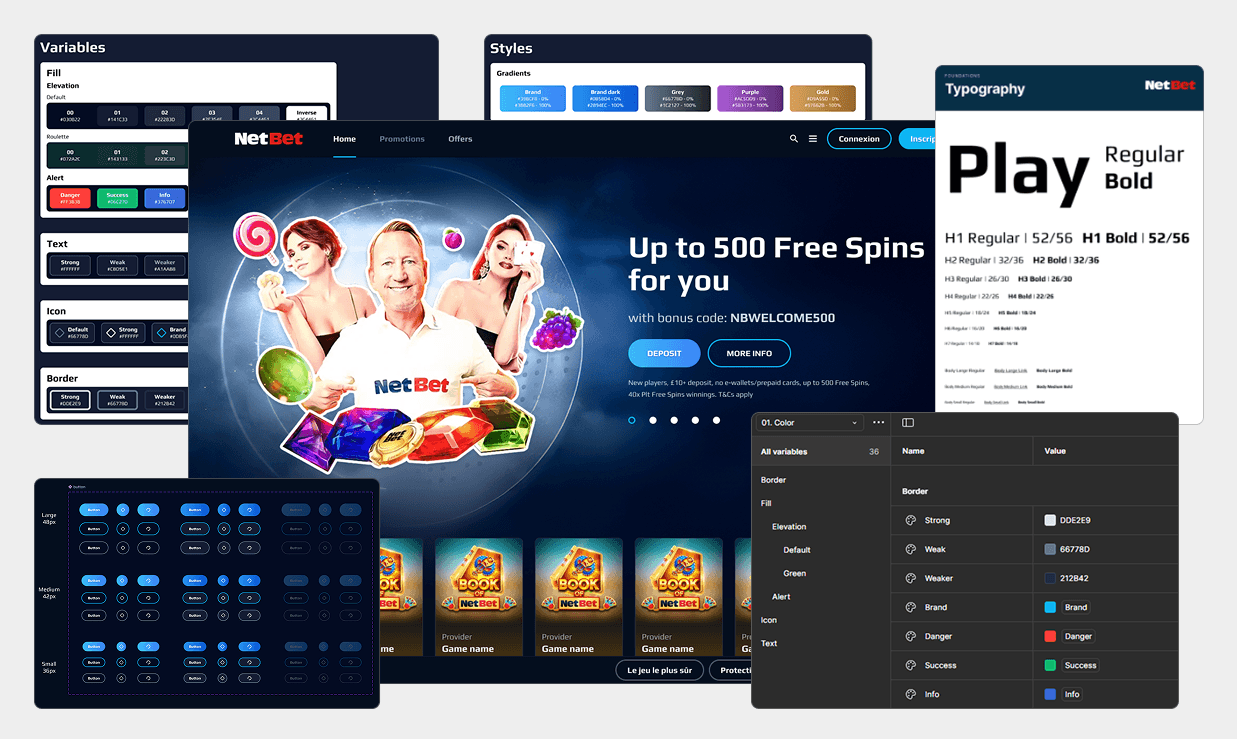
Different buttons on every page.
Sports had one hover state. Casino had another. Acquisition had its own. Designers rebuilt the same components from scratch every sprint because nothing was canonical, and revision cycles stretched delivery by weeks.
Marketing was a separate problem. Every campaign asset for social, display, web and CRM was drawn one by one in Photoshop. A promo banner that worked on Instagram had to be redrawn for the affiliate page, the email blast and the homepage hero. Repetitive updates, slow handoffs and little communication between design and marketing.
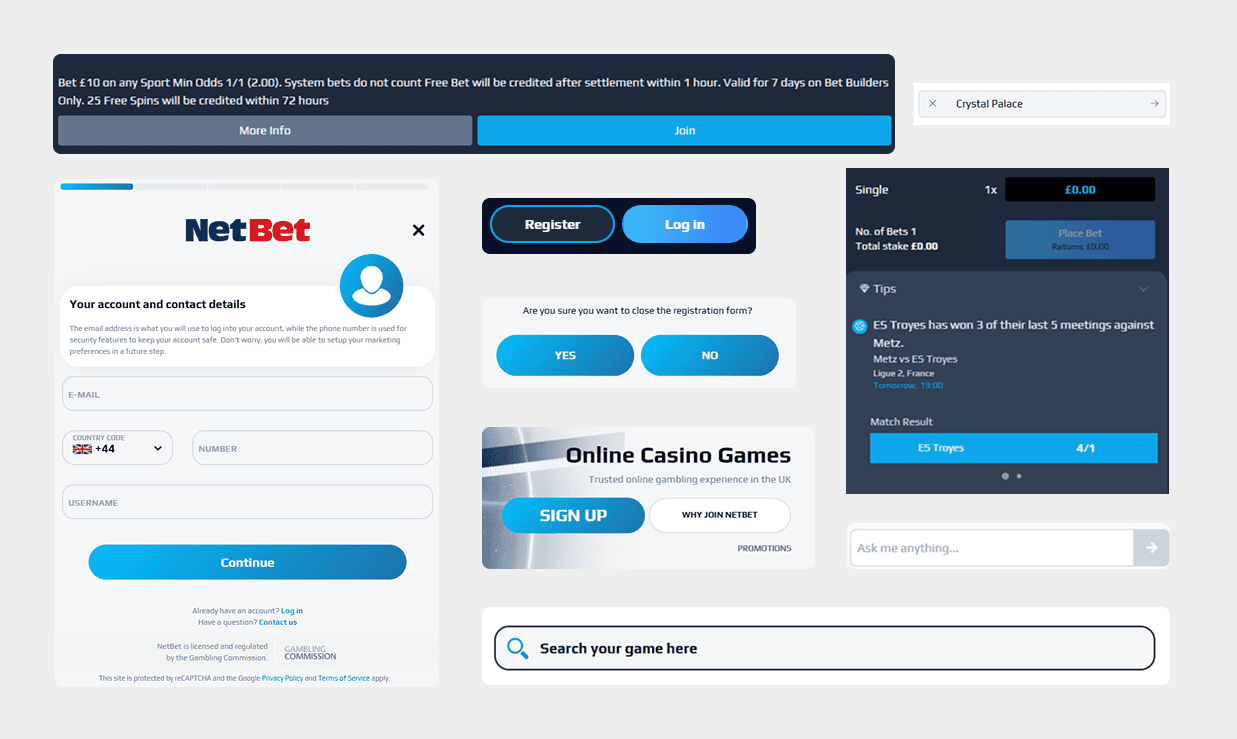
Foundations first. Components next. Templates last.
A fragmented system cannot be fixed by patching buttons. The fragmentation lives lower down, in the token layer that everyone was paraphrasing. We started there.
Three months of work. Tokens, typography, an 8-pixel grid and elevation came first. Then components, modelled with Figma variants for every state. Finally, templates that assembled everything into reusable layouts for casino and acquisition. Front-end shipped each layer in parallel, with a feedback loop close enough that nothing was built twice.
- Token-driven foundations aligned with NetBet's brand
- 8-pixel grid for predictable implementation
- Component variants for hover, disabled, active states
- Tight feedback loop with front-end on every iteration
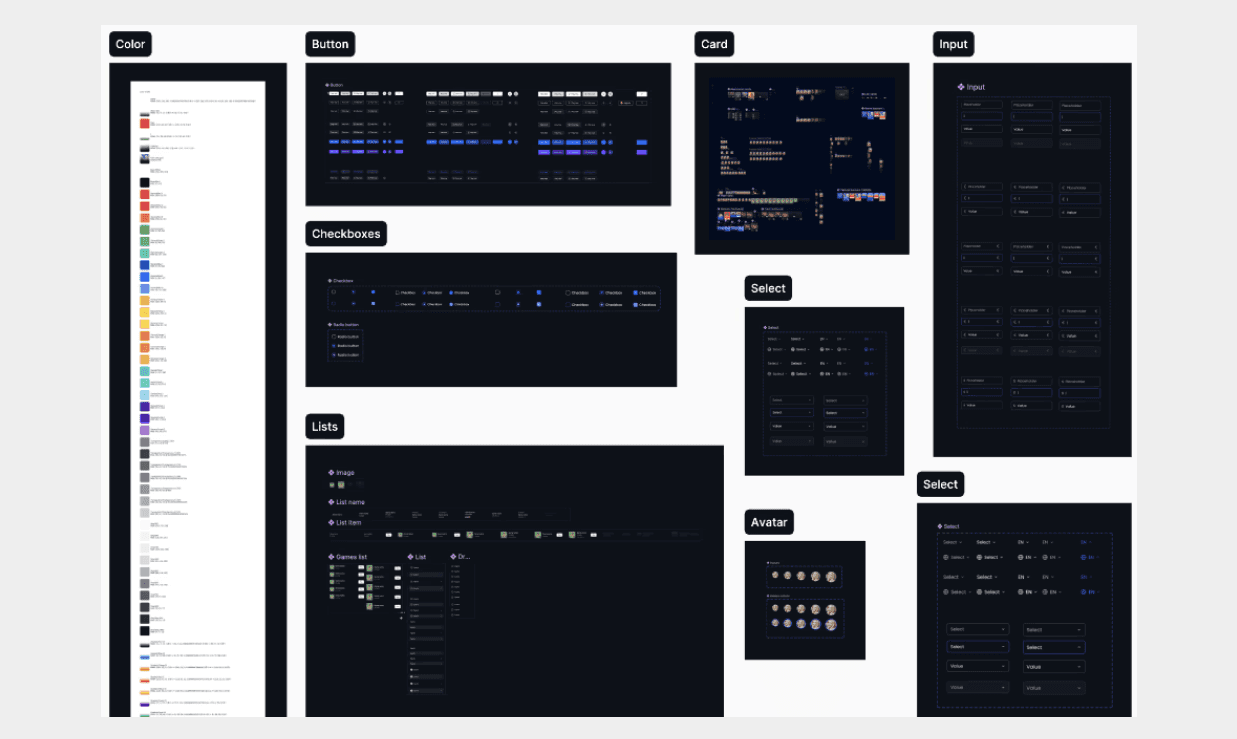
From components to campaigns.
Product was solved, marketing was not. They saw the system land and asked the obvious question: why are we still drawing campaigns in Photoshop?
The answer was that no one had taken the system that far. We extended it with a modular campaign template, wired to the same tokens, the same components and the same documentation, which replaced the one-off Photoshop files. Social, display, web and CRM, all from a single source. A promo banner went from two days of work to being localised across four channels in ten minutes.
- Reusable components and layout variants per channel
- In-file documentation for designers and marketers
- Clear structure for fast updates and rollouts
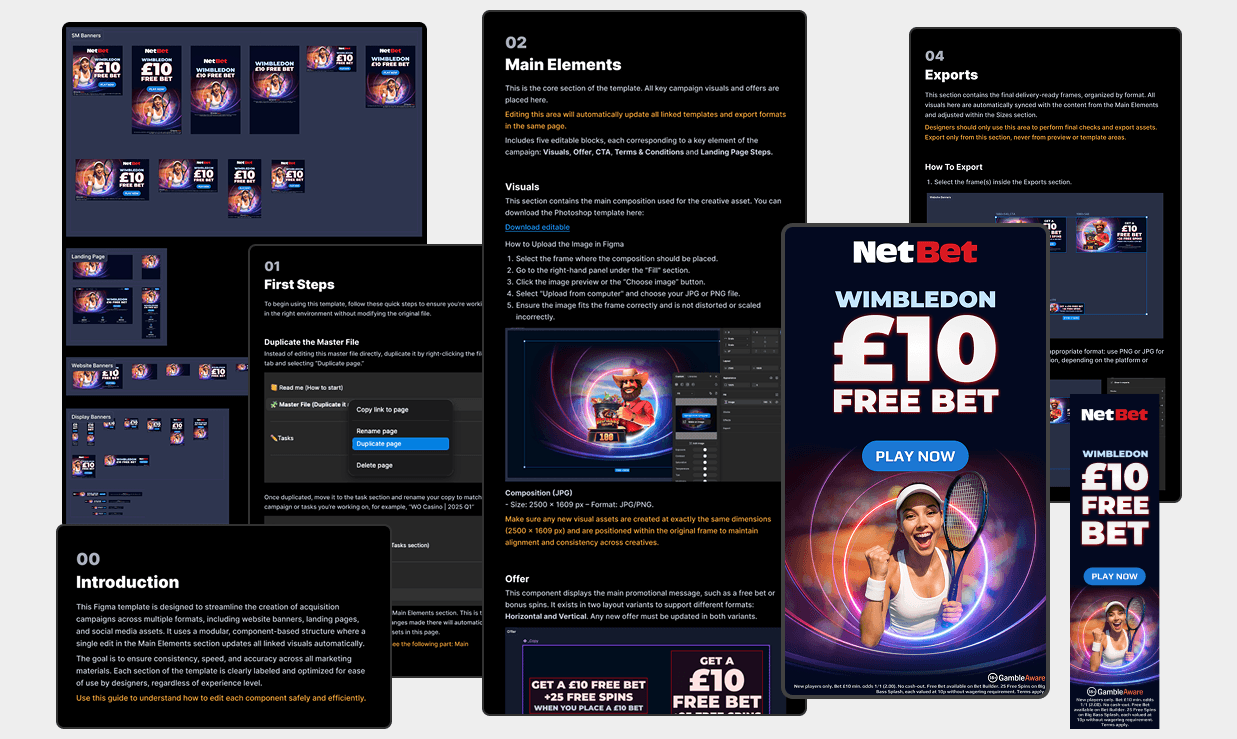
Faster handoffs, faster campaigns.
Component delivery got shorter. Squads aligned around a shared foundation. The template carried that same foundation across to marketing, and what used to be days of asset production became a few clicks.
The 70% cut in asset time was real. The bigger change was quieter: design and marketing finally worked from the same library.
- Reduced component development time
- Accelerated hand-off between design and front-end
- Fewer revisions in QA
- Consistent visual language across product and marketing